

What Do Real Estate Photographers Include?

A listing can have the right price, a strong location, and a well-maintained home, then still lose attention because the media does not show its value clearly. So, what do real estate photographers include? The answer depends on the property, the marketing plan, and the provider, but a professional package should deliver more than a folder of attractive images. It should provide market-ready assets that help buyers understand the space and give agents a confident presentation across listing platforms, social media, and print.
What Do Real Estate Photographers Include in a Standard Package?
Most real estate photography packages begin with a planned photo session of the home's interior and exterior. The photographer works through the property with listing use in mind, selecting angles that show room flow, natural light, finishes, storage, and key selling features without misrepresenting the space.
A standard package generally includes professionally captured and edited still photographs. This often covers the main living areas, kitchen, dining space, bedrooms, bathrooms, exterior frontage, backyard, and any features that materially support the listing. A lake view, workshop, covered patio, renovated ensuite, suite entrance, or acreage setting may deserve more attention than a secondary room with little marketing value.
The number of delivered photos varies. A compact condo may need 20 to 30 strong images, while a larger family home, luxury property, or rural listing may need 40 or more. More photos are not automatically better. The objective is a complete, polished visual story, not repetition.
Interior photography
Interior photography is where professional judgment is most visible. A photographer balances window light, interior lighting, composition, and perspective so rooms feel bright, clean, and accurately proportioned. This typically involves setting up each frame carefully rather than simply documenting every corner.
Professional editing is part of the service. Depending on the image and the photographer's process, this may include exposure balancing, window detail correction, color adjustment, straightening vertical lines, and removal of minor distractions. The finished photos should feel natural and consistent from room to room.
Editing does have limits. A professional photographer can reduce minor visual distractions, but substantial virtual changes should be discussed in advance. Removing permanent defects, changing the condition of a property, or making a small room look dramatically larger can create an inaccurate representation and undermine buyer trust.
Exterior and property photography
Exterior images usually include the front of the home, backyard, patios, decks, landscaping, views, and important outbuildings. For properties in the Okanagan Valley, exterior coverage can be especially valuable when the setting is part of the sale. Vineyard views, pool areas, outdoor kitchens, lake access, orchards, and mountain backdrops often need thoughtful timing and framing.
Weather and light matter. Bright midday sun can create harsh shadows, while overcast conditions can make a home look flat if the images are not handled carefully. A photographer may schedule around the best available light or recommend a separate twilight image when the architecture, landscape lighting, or outdoor entertaining areas justify it.
Editing, Delivery, and Usage Are Part of the Product
The shoot itself is only one part of professional property media. A useful package also includes post-production, organized delivery, and image files sized for practical marketing use.
Most providers deliver high-resolution images suitable for print and lower-resolution files for online use, or a gallery that makes downloading the appropriate format simple. Delivery is commonly handled through a private online gallery, which gives agents a clean way to review, download, and share approved assets with their marketing team.
Turnaround time should be clear before the shoot. Many real estate photographers deliver within one or two business days, while rush delivery may be available when a listing needs to go live quickly. Fast service matters, but it should not come at the expense of careful editing and consistent quality.
Usage expectations should also be understood. Real estate photography is normally created for marketing the property during its current listing period. If images will be used for a builder's portfolio, long-term development marketing, editorial publication, or another business purpose, confirm the licensing terms first. Clear expectations protect both the client and the photographer.
Optional Add-Ons That Can Strengthen a Listing
Not every home needs every media service. A one-bedroom apartment may perform well with excellent still photos and a clear floor plan, while a waterfront estate may need a broader campaign. The right package should reflect the property, likely buyer, price range, and where the listing will be promoted.
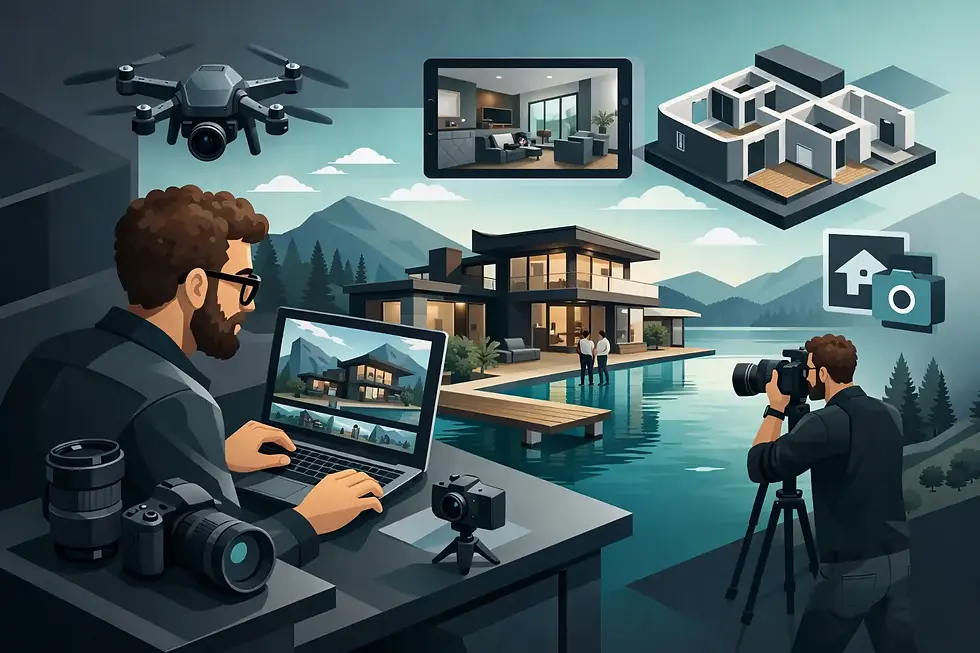
Common add-ons include aerial photography, video, floor plans, virtual tours, twilight photography, and virtual staging.
Aerial photography and video
Drone images can show what ground-level photos cannot: lot size, proximity to water, surrounding amenities, access roads, views, and the relationship between the home and its setting. They are particularly useful for acreage, waterfront homes, developments, and properties with a meaningful location advantage.
Aerial work is not a default requirement. It may add little to a dense urban listing with limited surrounding context, and it can be restricted by weather, airspace, or nearby airports. When it adds real information, though, it can quickly establish a property's scale and location.
Property video gives buyers a stronger sense of movement and flow. A short cinematic walkthrough can work well on social media, agent websites, and listing presentations. Video is most effective when it has a defined role - showing how living spaces connect, highlighting outdoor lifestyle features, or creating a premium impression for a higher-value listing. It should not replace still photography, since buyers still rely heavily on photos when scanning listings.
Floor plans and virtual tours
Floor plans answer a practical buyer question: How is the home laid out? They help viewers understand room connections, dimensions, and overall scale before booking a showing. For homes with suites, unusual layouts, multiple levels, or extensive renovations, that clarity can reduce confusion and attract more qualified inquiries.
Virtual tours provide a self-guided way to explore a space remotely. They can be a strong fit for relocation buyers, vacant homes, new developments, and listings where access for repeated showings is limited. They require more time and planning than standard photos, so they are best selected when remote viewing will genuinely support the sales process.
Virtual staging and twilight images
Vacant rooms can be difficult for buyers to interpret. Virtual staging can show how a living room, primary bedroom, or dining area may function without the cost of physical furniture rental. The staged version should be clearly identified where required, and the original image should remain available when appropriate.
Twilight photography is another selective upgrade. A professionally created dusk image can give a listing a strong lead photo, especially when exterior lighting, a pool, expansive glazing, or a view is part of the appeal. It is less valuable when the exterior has limited visual interest after dark.
What Is Usually Not Included Unless Requested?
Assumptions create avoidable surprises. Standard real estate photography does not always include drone work, video, floor plans, virtual staging, extensive object removal, property preparation, or travel outside the photographer's regular service area. Some packages include a set number of images, while others are based on the home's size and scope.
It is also worth separating photography from staging and cleaning. Photographers may make small adjustments for a frame, such as turning on lights or moving a minor item, but they are not typically responsible for preparing the property. The home should be cleaned, decluttered, and photo-ready before arrival so the session can focus on creating strong images rather than working around avoidable distractions.
How to Choose the Right Package for the Property
Start with the listing strategy, not a menu of add-ons. Consider what makes the property competitive and how buyers are likely to encounter it. A professionally photographed starter home may only need polished photos and a floor plan. A luxury listing may benefit from photography, video, aerial coverage, and twilight imagery because the marketing needs to communicate lifestyle as well as square footage.
Ask the photographer what is included in the quote, how many final images to expect, when delivery will occur, and whether aerial, video, floor plans, or virtual staging are separate services. Review their portfolio for consistent color, straight lines, natural-looking windows, and images that make rooms easy to understand. A dramatic image is useful, but every image in the gallery should support the buyer's decision.
The best property media package is not the largest one. It is the one that presents the home honestly, highlights the reasons to book a showing, and gives your listing a professional first impression before a buyer ever steps through the door.


Comments