

Listing Photos vs Video Tours: Which Gets Results?

A buyer scrolling through new listings may spend only a few seconds deciding whether a property deserves a closer look. That is why the decision between listing photos vs video tours is not simply a matter of adding more media. Each format does a different job, and the strongest marketing plan uses the right tool for the property, audience, and stage of the buyer journey.
For real estate agents and sellers, the goal is not to choose photos or video based on what feels more current. The goal is to make the home easy to understand, memorable enough to revisit, and compelling enough to generate a showing.
Listing Photos vs Video Tours: Different Jobs, Not Rivals
Professional listing photos are the foundation of property marketing. They give buyers a fast, clear way to assess the rooms, finishes, light, exterior, and overall condition of a home. Buyers can pause, compare spaces, look closely at details, and move through a listing at their own pace.
Video tours create a different kind of understanding. They show how spaces connect, how a person moves through the home, and how the property feels as a whole. A well-produced video can communicate flow in a way that even a strong photo gallery cannot always deliver.
The mistake is treating video as a replacement for photography. A listing with only video asks buyers to wait for the information they want. A listing with only photos may leave questions about layout and scale. In most cases, photos earn the initial click and support comparison, while video builds confidence and emotional connection once interest is established.
Why Listing Photos Still Carry the Most Weight
Photos remain the first and most practical asset in a listing. On property search platforms, social posts, email campaigns, and agent websites, still images are easy to scan and easy to revisit. They also perform well in the small preview spaces where buyers first encounter a home.
A strong lead image can stop a buyer mid-scroll. That may be a bright living room, a kitchen with a clear focal point, a view, a backyard, or an exterior that immediately communicates curb appeal. From there, the rest of the gallery needs to answer the buyer's basic questions without creating confusion.
Professional photography works because it is selective. It frames each space at its best angle, manages natural and interior light, and creates a consistent visual standard across the full gallery. That consistency matters. Dark phone images, crooked vertical lines, blown-out windows, or cluttered rooms can make an otherwise desirable property feel neglected.
Photos are particularly effective when a property has clear visual strengths: updated finishes, large windows, landscaped grounds, mountain or lake views, premium materials, or carefully designed interiors. They also give buyers a practical reference point after a showing. A buyer may watch a video once, but they often return to individual images while comparing several properties.
Where Video Tours Add Real Value
Video earns its place when a property has a story that depends on movement. Split-level homes, open-concept layouts, acreage properties, waterfront homes, new developments, and homes with multiple outdoor living areas often benefit from a guided visual experience.
A video tour can show a buyer how the entry opens into the main living area, where the kitchen sits in relation to the dining room, or how a patio connects to the yard and view. Those relationships are harder to communicate through still images alone.
Video also gives agents more material for marketing beyond the listing itself. A short property video can be used in social media posts, email outreach, presentations, and promotional campaigns. For sellers, that broader exposure can be especially useful in competitive markets where a property needs more than a standard gallery to stand apart.
That said, video only helps when it is intentional. A long, shaky walkthrough with poor lighting can create more uncertainty than it resolves. Buyers do not need every hallway documented in real time. They need a polished visual sequence that shows the home's best features, makes the layout easier to follow, and respects their time.
When Photos May Be Enough
Not every listing needs a full video tour. For a smaller condo, a straightforward townhome, or a property where the rooms and layout are easy to understand through photography, a high-quality photo package may be the more efficient choice.
This is especially true when the marketing budget needs to prioritize the essentials: professional photography, accurate floor plans where appropriate, and a clean listing presentation. A strong gallery with the right number of images will usually outperform a larger collection of average visuals.
Photos may also be the better option when a property needs to launch quickly. Photography is often faster to schedule, capture, edit, and publish than a more involved video production. If timing is critical, polished photos provide an immediate, market-ready asset without delaying the listing.
When a Video Tour Is Worth the Investment
A video tour is often worth adding when it solves a real buyer question or enhances a clear selling point. If the home has a dramatic approach, a large lot, indoor-outdoor living, multiple entertaining areas, or a setting that needs to be experienced rather than described, video can add meaningful context.
Higher-priced homes and distinctive properties also tend to benefit from video because buyers expect a more complete presentation. In the Okanagan Valley, for example, properties with vineyard views, lake access, acreage, or resort-style outdoor spaces can gain more from motion-based storytelling than a typical urban listing.
Video can also help attract out-of-town buyers. While it cannot replace an in-person showing, it gives remote prospects a better sense of whether the property is worth pursuing. That can lead to more qualified inquiries and better-prepared showings.
The Best Approach for Most Listings
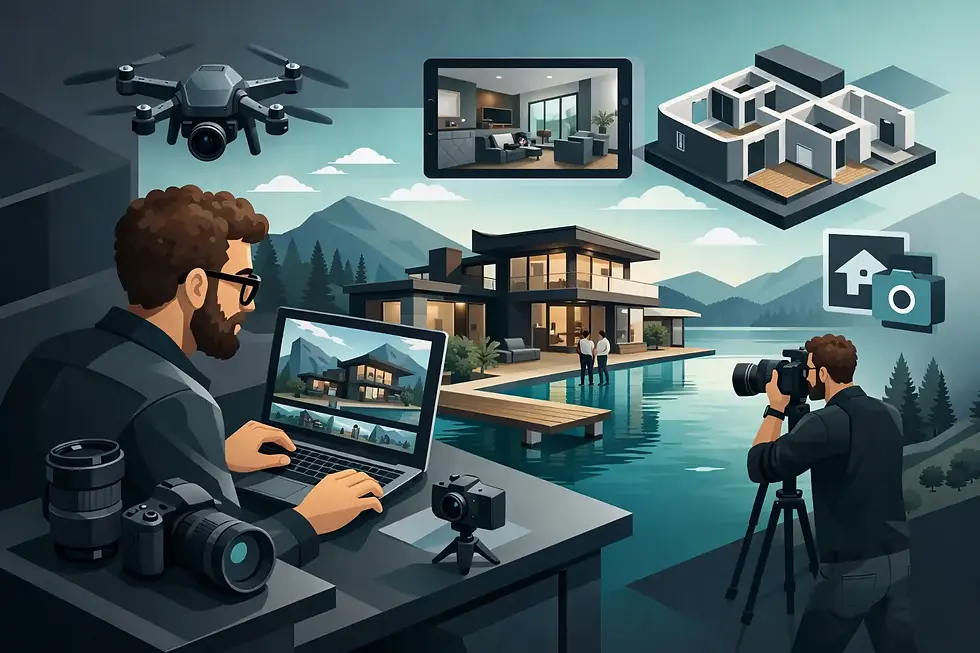
For many properties, the most effective choice is not photos versus video. It is professional photos supported by a concise, purpose-built video tour.
Start with a complete photo gallery that makes the home easy to evaluate. The images should cover key rooms, important upgrades, exterior spaces, and any features that influence value. Then use video to connect those highlights into a clear experience of the property.
The two assets should feel consistent. If the photography is bright, polished, and carefully composed, the video should carry the same visual standard. Inconsistent media can weaken the overall impression, even if one format looks good on its own.
A good real estate media plan also considers where each asset will be used. Photos are essential for MLS-style listing platforms, brochures, feature sheets, and preview images. Video is well suited to social promotion, listing pages, email campaigns, and agent branding. Planning for both from the start makes the final marketing package more useful.
Quality Matters More Than Format
Whether you choose photos, video, or both, production quality shapes buyer perception. The home should be prepared before the shoot, with clutter removed, lights checked, surfaces cleared, and key spaces staged to show function and scale. Professional editing should enhance the presentation while keeping the property accurate and believable.
For video, pacing is equally important. A tour should move with purpose, using stable footage and transitions that help viewers understand the home. For photography, image selection matters. Too few photos can leave buyers guessing, while too many repetitive images can make the listing feel unfocused.
The best visual marketing does not exaggerate a property. It presents the home clearly, confidently, and at a standard that reflects its market position.
Choose Media Based on the Property's Story
Before booking a shoot, consider what a buyer needs to understand before deciding to visit. If the answer is finishes, condition, light, and individual rooms, professional photography may do most of the work. If the answer is layout, movement, setting, or lifestyle, a video tour can add the missing context.
A well-planned photo and video package gives buyers fewer reasons to hesitate and more reasons to take the next step. That is the standard to aim for: media that makes the property clear, credible, and ready to be seen in person.


Comments