
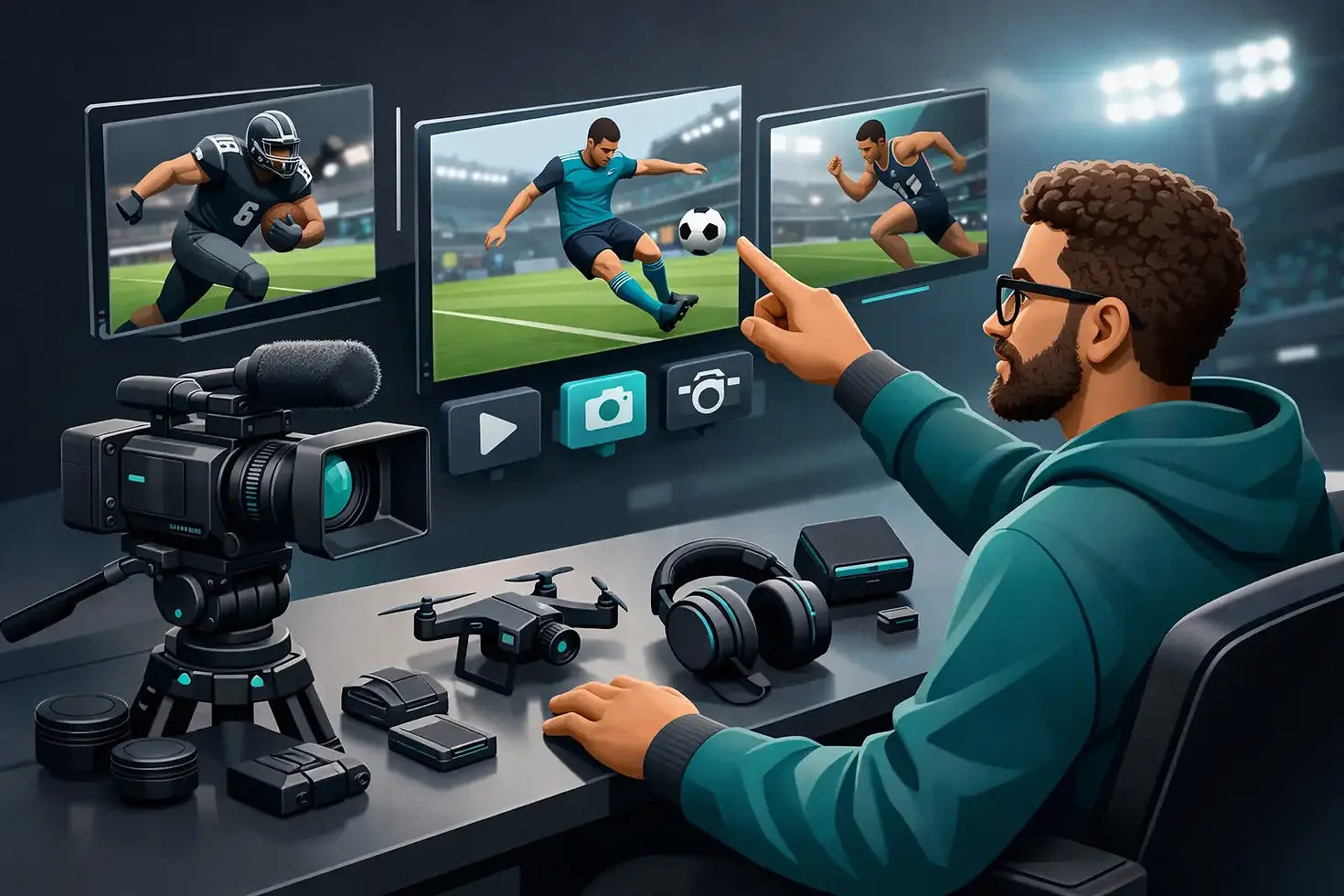
How to Choose a Sports Videographer

A great sports video does more than show what happened. It captures timing, pressure, movement, and the moments that matter when an athlete, team, or event is being evaluated by fans, sponsors, coaches, or organizers. If you are figuring out how to choose a sports videographer, the real question is simpler: who can consistently produce footage that is usable, professional, and aligned with your goals?
That answer is not always the cheapest option, the person with the newest camera, or the editor with the flashiest highlight reel. Sports videography is a specialist service. Fast action, changing light, unpredictable movement, venue restrictions, and short windows for key moments all raise the standard. Choosing well means looking past surface-level marketing and focusing on execution.
What to look for when choosing a sports videographer
Start with experience that is specific to sports, not just general video production. A strong real estate video, corporate brand piece, or wedding film does not automatically translate to sports coverage. In sports, the videographer has to anticipate play, understand angles that preserve the action, and follow movement without losing clarity.
This matters even more if your footage has a practical use beyond social media. Recruiting clips, sponsor content, event recaps, training review, and promotional campaigns all require different decisions during filming and editing. A videographer who understands those differences will ask better questions before the shoot and deliver footage that works in the right context.
A portfolio should show more than one good moment. Look for consistency across different sports, venues, and lighting conditions. Indoor courts, outdoor fields, mountain environments, and arena settings all present different technical challenges. If every sample is shot in ideal daylight with slow-motion edits and music doing most of the work, that tells you less than a full project that shows coverage, pacing, and shot selection.
How to choose a sports videographer for your actual goals
The most common mistake is hiring based on style before defining purpose. Style matters, but function comes first. A team that needs season-long content for promotion has different needs than an athlete building a recruiting package. An event organizer may need broad venue coverage, sponsor visibility, crowd energy, and a fast turnaround for post-event marketing. Those are not interchangeable jobs.
Before you compare providers, get clear on what the video needs to do. Are you trying to attract registrations, secure sponsorships, document an event, support athlete promotion, or create regular social content? The clearer the goal, the easier it is to judge whether a videographer is the right fit.
A good sports videographer should be able to explain how they would approach your project, not just quote a price. They should talk through coverage priorities, expected deliverables, filming constraints, and turnaround. If they only discuss gear or vague creativity, you may end up with footage that looks polished but misses the assets you actually need.
Ask how they plan for the sport itself
Different sports demand different shooting strategies. Field sports require anticipation and field awareness. Court sports need fast reframing and clean tracking. Combat sports call for careful positioning and timing. Endurance and outdoor sports often involve mobility, weather, and safety considerations.
You do not need a videographer who has filmed your exact sport a hundred times, but you do want someone who understands how to prepare for it. Ask how they identify key moments, where they position themselves, and how they adapt when the pace changes. Their answer will tell you a lot about whether they rely on luck or process.
Look beyond the highlight reel
Highlight edits are useful, but they are also selective by design. Anyone can build a sharp 30-second reel from hours of footage. What matters is whether the videographer can maintain quality across an entire event or session.
Ask to see complete examples when possible. That could mean a full event recap, a longer athlete feature, or a set of clips delivered for a team campaign. You want to see whether the footage stays stable, whether the action is readable, and whether the edit supports the purpose instead of covering weak coverage with effects.
Reliability matters as much as creativity
In sports, missed moments cannot be recreated. If the videographer is late, underprepared, or unclear on the schedule, the cost is not just inconvenience. It can mean lost content, disappointed stakeholders, and a wasted opportunity.
That is why professionalism matters. Pay attention to how they communicate before the shoot. Are they asking the right questions? Do they confirm timing, access, shot priorities, and delivery expectations? Do they understand who the decision-maker is and what success looks like?
Reliable vendors tend to be clear and structured. They outline what is included, what is not, and what conditions may affect coverage. They do not overpromise. They give realistic turnaround times and explain the approval process if one is needed. For teams, event organizers, and sports businesses, that kind of clarity is often more valuable than a more dramatic edit style.
Equipment matters, but not in the way most people think
It is reasonable to ask about cameras, lenses, stabilization, and audio, especially if interviews or event sound are part of the project. But equipment is only part of the equation. The better question is whether the videographer knows how to use the right setup for your environment.
Sports footage can fail with great gear if the operator cannot track action, expose correctly in mixed lighting, or adapt to fast transitions. On the other hand, an experienced specialist can produce excellent results without turning the conversation into a gear checklist. Look for confidence backed by examples, not technical jargon used as a sales tactic.
Pricing, deliverables, and trade-offs
Cost always matters, but price only makes sense when tied to scope. A lower quote may reflect less coverage time, fewer cameras, minimal editing, slower turnaround, or limited usage rights. A higher quote may include pre-production planning, multiple deliverables, better coverage, and a more polished final product.
This is where many buyers compare numbers without comparing outputs. Ask exactly what you are receiving. How many hours of filming are included? Will you receive a finished highlight video, short-form social clips, raw footage, or all of the above? Is travel included? What is the turnaround? Are revisions part of the package?
There is always a trade-off. If your budget is tight, it may be smarter to narrow the scope instead of expecting full-event coverage and a large edit package at a discount rate. For example, filming one feature athlete, one key game, or one concise recap can produce stronger content than stretching a small budget across too much ground.
The local advantage can be practical
If your project is happening in the Okanagan Valley or elsewhere in British Columbia, a local sports videographer may offer practical advantages. Familiarity with venues, weather patterns, travel logistics, and regional sports communities can make coordination easier and reduce friction on shoot day.
That does not mean local is always better. A stronger out-of-market specialist may still be the better fit for a high-stakes project. But when skill level is comparable, local knowledge can improve efficiency and reliability.
Questions worth asking before you book
A short conversation can reveal a lot. Ask what kinds of sports projects they handle most often and what deliverables they recommend for your goals. Ask how they approach fast-paced action, how long editing usually takes, and what they need from you before the shoot.
You should also ask what can go wrong. Weather delays, restricted access, poor lighting, schedule changes, and limited shooting positions are common issues in sports production. An experienced videographer will answer calmly and specifically. They will have a plan instead of pretending problems never happen.
If you are speaking with a specialist such as Maurer Media, this is also the point where niche experience becomes more meaningful. A provider focused on action-driven visual work is more likely to understand the difference between simply recording a game and creating media that supports promotion, branding, and long-term use.
The best fit is the one that makes your footage useful
When people think about how to choose a sports videographer, they often focus on visuals first. That is understandable. You want strong footage. But the better way to decide is to ask whether the finished work will be useful after the shoot is over.
Will it help an athlete present themselves professionally? Will it give a team content worth posting all season? Will it help an event look credible to sponsors, participants, and future attendees? Will it save you from having to re-explain the brief, chase updates, or settle for footage that misses the point?
That is what separates a decent creative vendor from a dependable sports videographer. The right choice is not just someone who can film action. It is someone who can deliver content with purpose, under real conditions, and without creating more work for you. When you find that, booking becomes much easier.


Comments